a spring song

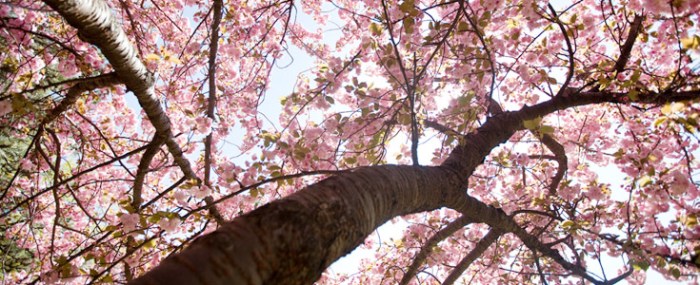
by Lyman Whitney Allen

Is it wrong for the thrush to sing?
        Can the crocus keep back its bloom?
And shall not a soul that feels the Spring
        Break forth from its house of gloom?

O passionate heart, be strong!
        Thou wert made, like the birds and the flowers,
For music and fragrance the whole day long
        In the April light and showers.

To every one it is given
        To love, and to hope, and to do;
There’s never a power on the earth or in Heaven
        Can throttle a soul that is true.
12923754-mmmain
Image: Robert Sciarrino/The Star-Ledger

Lyman Whitney Allen was pastor of South Park Presbyterian Church for 27 years.  Author of Newark’s official celebration ode for the 1916 commemorations, he withdrew from full-time ministry later that year to devote himself to literature. “A Spring Song” was printed in The Newarker of April 1916 and in The Newark Anniversary Poems.
to newark

by Haniel Long

The day a modern city celebrates
Her age, and wonders what her life may mean,
Long dead philosophers could come to her,
Poets and scientists should throng to her,
And the most noble thoughts of men and women
Alive and dead, should quicken in her mind.
The clouds and stars should speak, nor should the fields
Be dumb; and the procession of the years
Should bring her many a richly ‘broidered word
Taken from the loom of time.
                                                           What would they say?
Newark, the years would bring the self-same words
They brought of old to Baghdad and Peking
And many an elder city now forgotten,
The self-same words they bring to San Francisco,
London, Berlin; for they would say to you
That though the gardens of the distant past
Are fair in memory, and though the dust
Of ancient times came to consummate flower
In many a beautifully bodied girl
And boy, in many a tender-hearted woman
And stalwart man, this life of ours today
Is quite as fair, and animated dust
As precious. They would say to you that still
Apples of the Hesperides are bright
And waiting to be picked, and days are fresh,
And dogwood still is white in early May.
And they would say that never any town
Was more belovèd of eternity
Nor given a more golden chance. Newark,
You have the only stuff that ever was
Of glory, for you have the souls of men:
The dream of love and justice which you weave
Out of the faces in your thoroughfares,—
A girl-like sunlight on the tasseled corn;
Beside her, eager with his love, a youth
Whose stride is music and whose laugh is wine,—
The dream you weave of them, the dream you weave
Of all your children and their hopes and fears,
Will be a prophecy of time to come,
When, in the wisdom of his ageless heart,
Mankind shall build the City Beautiful.


Image: Guzman via glitteratiincorporated.com

While teaching English in Pittsburgh, Long submitted this entry to the 250th anniversary poetry competition. It appeared in the September/October 1916 edition of The Newarker and The Newark Anniversary Poems

on spring

Image: Yong Hee Kim via The Cultural Landscape Foundation

Hail welcome Spring, with all thy train,
Return and cheer our earth again;
And bid thy warmer gales to blow,
And thy refreshing show’rs to flow.
A short time since, a few weeks past,
Our streets were pav’d with icy glass,
And howling winds were hurl’d around,
With storm and rain we heard the sound;
All nature mourn’d her torpid state,
Enfetter’d by the hand of fate;
A dreary waste o’er cast with gloom,
Beset with tempest, rain and storm;
No ray of pleasure beam’d along,
No bleating flocks nor warbler’s song,
To soothe the rigour of the skies,
Or cause the peasant’s hope to rise.
But now rejoice, the scene is chang’d,
The warmer rays do shine again;
And lambs do bleat, while birds they sing,
All echo praise to welcome Spring
The neighing horse and lowing herd,
With eager steps bound to the mead;
Where Nature’s luxuries unfold,
Their stores of fatness for the world.
While sportive play their joys enhance,
They taste the rich luxuriance;
Forget the scanty winter store,
For plenty spreads the valley o’er.

This ode, signed simply “A., Newark, March 1801,” appeared in the Newark newspaper The Centinel of Freedom on the 31st of that month.

broad street

by Augustus Watters

Image: newarkstory http://newarkstory.com/Newark_Story/Places_photos_2.html#42
Image: Newark Story

(1666-1916)

When lilacs bloom in urban bowers,
Sweet harbingers of summer hours,
And cherry-blossoms lightly fall
Like snowflakes by the garden wall;
When robins hide in apple-trees,
And pansies nod in every breeze,
And like cathedrals, tall and grand,
Our hoary elms majestic stand,
While underneath the current flows
Of human joys and human woes,
Then seems the street a mighty stream
On which we mortals drift and dream.
Here toiled the Fathers in the fields,
Where earth her truest treasure yields,
And here the Sons, with reverent eyes,
Behold a royal harvest rise.
Yet ever, ‘neath the starry cope,
The radiant barges Love and Hope
Move side by side with Grief and Care,
And all the flotsam of Despair.
In vain the pilots seek to force
Their way against the current’s course,
And where they’re bound, or whence they came,
Nor sage, nor bard can ever name.
And none of all the fleets that glide
Along the weird and heaving tide
Turn back their prows or ever teach
What Port the later Pilgrims reach.

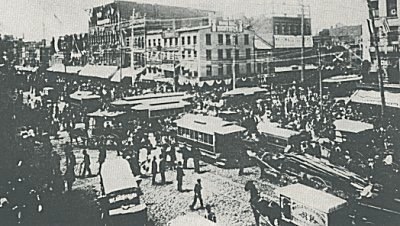
Frustration with Newark’s congested streets led to the opening in 1916—Newark’s 250th anniversary year—of the Public Service Terminal on Park Place, a few blocks north of Broad and Market. Linked to the terminal was the city’s earliest subway, a short trolley line segment beneath Cedar Street. The new terminal saw more than 2,500 streetcar stops per day in 1916.

Augustus Watters’ meditation on bustling Broad Street was included in The Newark Anniversary Poems, published the following year.

hibernia, moore and the muses

irish (1)
Image: Newark Public Library

When England’s blood-red lion spread
        Destruction through the land;
And vanquish’d freedom frighted fled,
        Before the tyrant’s hand;

The drooping harp Hibernia hung,
        In sorrow—for her fall,
Neglected, silent, and unstrung,
        In Tara’s lonely hall.

“Rest here, forlorn harp,” she said,
        “No hand thy sleep shall break;
No slave thy free-born fame shall wed,
        Or thy sweet strains awake.

On thee the light of beauty’s eyes,
        No more shall fondly beam,
Despondence dark and constant sighs,
        Shall crowd thy woe-fraught dream.

The sky shall be thy roof of blue,
        The dews thy tears of grief;
Thy shade the ivy’s dusky hue,
        Thy wreath the nightshade’s leaf.

Farewell, fond harp, we now must part,
        No more to hear thy songs,
Till Freedom’s voice shall rouse some heart,
        To vindicate thy wrongs.”

The muses, trembling, heard the vow,
        The weeping goddess made,
And straight to Tara’s verdant brow,
        The maids of music stray’d.

The awful mandate to revoke,
        The goddess they implore—
Her heart relented while they spoke,
        And gave her Harp to Moore.

Whether Dublin-born poet, entertainer, satirist and patriot Thomas Moore stopped in Newark on his 1804 American tour is unrecorded, but his compositions—especially the Irish Melodies—inspired countless local versifiers and songwriters. The anonymous ode above was printed in the Newark Daily Advertiser of August 15, 1832.

weequahic park in the dark

by David Shapiro

J. Ceravolo died 1988

Oh Joe
We walked across the lake
“That’s no way to walk”
You loved each bug and the cosmos
But you had no job
Oh Joe
It was an Olmstead almost
With ducks and a track
And a temple on top
Women washed their cars
And you loved the baby
Under lacy incubation
With your engineer’s respect
Oh Joe

Allen Ginsberg walked beside me
Confessed his visions might not be real
But I had seen God in dungarees
In daylight in the waves at Deal
Predict the destruction of the bulwark
Weequahic Park in the dark
And you had read the conscious lake
Oh Joe full of the dignity of the seasons your school

You explained—
I see the words around the emotion
Then I write them down—
It was your system of the spider-web
You were sad
But couldn’t explain

Missing you now like an oak in 1962
Or the word oak
I see your spider-web I write it down
Open to me, Weequahic Park
Where the shadow of a cloud passed over
As I lay on my back in the sunny court
As I lay on the lake in the boat
Thinking I could never die

Image: Jennifer Brown/The Star-Ledger

David Shapiro’s elegy for fellow poet Joseph Ceravolo was published in A Burning Interior (2002).

african dancer

by Hazel Crawley

Moved by a slim
A more insistent pulse
than that which drums
The life-blood through his veins
The dancer leaps
No, corkscrews into space
And then returns
By deft glissando to
Dynamic earth

Along the raw
Primal percussive thread
A million cells
Which have no need of light
Contract expand
Propel him here then there
Down ancient paths
My ancestors knew well

And though my brain
Is well glazed with veneer
I smile to see
One foot is still alive

“African Dancer” appeared in Crawley’s collection Erratica (1975).

reminiscence

by Thomas L. Masson

Image: Library of Congress

One morning at three o’clock
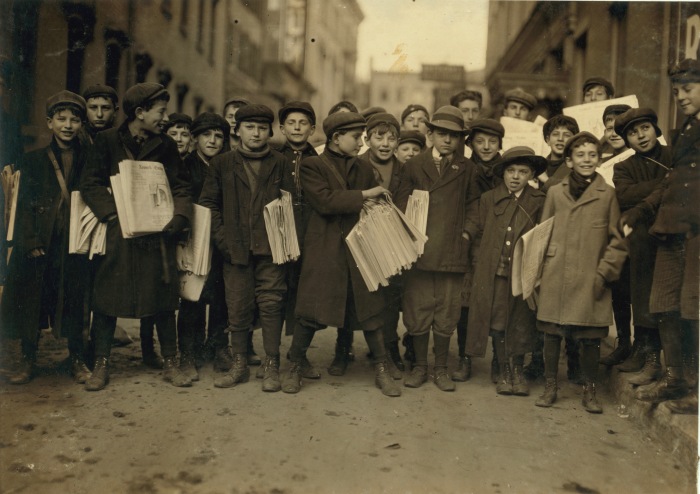
I stood on the corner of Broad and Market, Newark.
I had come from New York; I was going to my home in Glen Ridge.
I stood and waited for the Bloomfield Avenue car. The night
Was cool and pleasant, and I enjoyed the sight of the boys
Selling the morning papers; although I now confess
To the thought that I had about those boys. I thought
That they ought to be in
Bed. Every boy ought to be in bed at that hour. Yet
Here in America, we countenance such things. We
Have a lot to learn, here in America. At that moment
I viewed Newark in the light of a rising day. It seemed
To me that a vision of the future projected itself across the
Sky. There was so much life going on even then—the full
Abounding American life that we see in our cities, with all their
Suffering and crime and injustice and marvelous energy.
My friend, has the thought ever come to you at night,
In some large city, as you looked up at the stars
And viewed the majesty of God, that
That same majesty is forever visioned in the faces of the common
Crowd? Think then of the radiance of honesty, of perseverance,
Of dumb waiting for better things, of the glory of self-denial, of the
Sharing-spirit. Think of that, brother, and incline thine
Head humbly to the majesty of the Eternal
Law. The car came, and I stood up all the way home, but
I was glad that I had seen Newark on that night. It gave me a belief in its
Destiny, an abiding faith in its promise to fulfill
Its mission. I say this, knowing the grief in
Homes, the patience and resignation under the ban
Of toiling humanity. For out of the
Light of the coming day there is a something,
A Something that tells me that, as Browning says,
God is in his Heaven and all’s right with the world,
And Newark.

Thomas Lansing Masson was an editor and humorist. “Reminiscence” was printed in The Newarker of April 1916, and in The Newark Anniversary Poems the following year.

Lewis Hine photographed newsboys on the streets of Newark for the National Child Labor Committee. The image above dates to 1909.

beauty triumphant

by Antoinette Quinby Scudder

Across the meadows swung the train
By black roofed sheds and earth-cuts raw,
And I half choked with dust and steam
Peered through the blurring glass and saw

How in great waves of grey and brown
The smoke and salty fog were rolled.
Heavily plunged the dying sun
And blew a wrathful spume of gold.

The monster signs that boast of soap,
Chocolate, thread were hid each one;
Between slant grass, the scattered pools
Vivid as unset garnets shone.

And where the rolling clouds would glow
Vermeil or crimson angrily
Rose in a cluster straight and tall
The chimneys of a factory.

They might be stamens grouped within
The deep heart of that swarthy rose;
Or shafts of rough pearl rising from
Some dim haunt that the sea-king knows

And watching them I thought in spite
Of dirt and ugliness and sin
Beauty will never vanquished be—
Triumphant still she enters in.

Image: Andrew F. Kazmierski

Born into an influential Newark family, Antoinette Quinby Scudder became a published poet and successful actor and playwright. One of her plays spurred the creation of the Newark Art Theater, forerunner of the Paper Mill Playhouse which she co-founded.

“Beauty triumphant” is taken from Scudder’s 1921 collection simply entitled Poems.

old mulberry street

by E. Alma Flagg

mulberry194001
Image: newarkstreets.com

From Chestnut Street north went
        that road of our childhood,
Fascinating all the way
From the tavern owned by one
        classmate’s folks,
Past a couple of factories
Fish market, shoemaker’s shop,
        hardware, grocery stores, laundry,
And a drug store with several
        large, shining globes,
Filled with liquid—red, yellow,
        green, blue—
And the candy stores where a
        penny bought
Lafayettes, lollipops, licorice, or
        Mary Jane,
Or even a grab-bag of assorted
Sweet, crunchy, chewy morsels,
Or a nickel bar of brown or pink or white taffy;
And on through Chinatown
Where restaurants served strange foods,
To the markets which
We could only visit on Saturdays.
The Markets! outdoor extravaganzas
Of meats, eggs, produce, fish, bread,
And, wondrous bright,
A great revolving cylinder
        roasting peanuts—
What a smell! and what a taste!
Hot peanuts, m-m-m, delicious!
Oh! what an adventure a
        trip to the markets—
        of Mulberry Street was!
Through busy crowds of people all intent,
And maybe bumping us about,
But it did not bother us.
The joy of being in the
        middle of it all
Went home with us to
        be savored
Till we went that way again.

Alma Flagg’s trip up “old Mulberry Street” can be traced (in reverse order) through the listings in Price & Lee’s 1940 Newark city directory, of which a small section is shown here. The poem is found in Flagg’s collection Lines, colors, and more (1998).