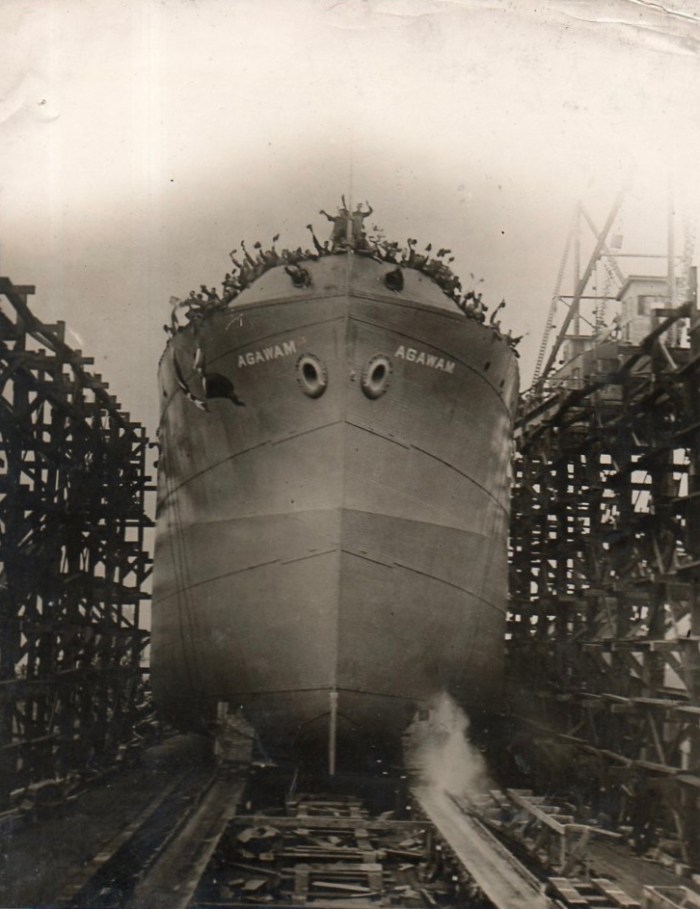
All of us have our ships at sea; Will they ever reach port, I wonder. A few may sail in merrily, But most will the wild waves sunder.
And some which do reach port, I guess, Will discharge only damaged cargoes; Better had they been kept by stress Of weather, or Fate’s embargoes.
Trust not thy treasures on the sea, Nor idly expect joy to-morrow; Take what to-day doth offer thee, Nor pleasure nor trouble borrow.
A businessman involved in paper manufacturing and patent medicines, Alfred Gibbs Campbell used his verse to promote the antislavery and temperance causes to which he was passionately committed. His collection entitled Poems was published in Newark in 1883.
On a commonplace workday weekday I was startled at the sight of a horse on High Street stepping out with Lippizaner grace into the frenzied stream of mechanized morning traffic so that the patrolman astride him could oversee the safe passage of three small schoolchildren.
What a handsome beast is the horse! How generously he has lent his strength/his fleetness to man! Small wonder that the Attic Greeks— lovers of beauty tamers of the horse sailors of the sea— seeing the tossing of many manes in the powerful plunge of Aegean waves over sandbars gave to their sea-god, Poseidon the epithet, Hippias Lord of the Horse.
The next day there was no horse on High Street. The friendly blue-garbed school guard watched for the children. But I still remember a workday weekday made uncommon/classic for me just by the sight of a horse.
Longtime resident Margaret Tsuda included this poem in Urban River, published in Newark in 1976.
The night was hushed and the street was dark; Dimly came the flicker of the lone pale arc. And dreary from the corner, a chill wind stole, Huddling past the desolate yards of coal.
But while I peered at the yards of gloom And saw how the heaps lay dark as doom, I heard a crackle and I heard a roar— And the black piled coal was seen no more!— Suddenly I felt the night to sag,— And Time fell away, like a worn-out rag!
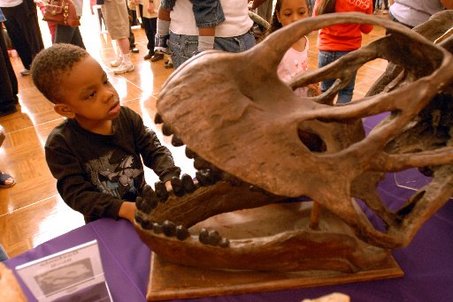
I saw before me how the forests towered, How the fronds and the ferns and the creepers flowered; I saw the jungles of gigantic grasses; I saw the waving of the monstrous masses; And the looping mosses and the crowding spores!— I watched how the greenery leaps and pours Down from the branches in a rich green blaze, Flooding on the tangle of the riotous maze! But more than this, I could feel the heat Soak on the forest and simmer and beat! I spied dim swamps and I spied wide lakes, Where hissed and threaded the huge red snakes; I saw the lizard and Okapi lunge; And the rearing Brontosaurus thrash and plunge! But while they were battling in the bellowing din, I heard a peal and a crash begin: Earthquakes weltered and convulsions tore— I heard Chaos dance—I heard Chaos roar— The deafening jungles were hurled down deep— Earth closed over. . . . Then in one swift sweep, Burying forest and beast and tree, Years came flooding like a wild white sea!
Again I stood in the hush of night Underneath the flicker of the lone pale light; And I gazed at jungles and their fronds and ferns— Jungles of foliage in a heat that burns— Jungles with sunlight and beasts,—the whole Huddled and crowded into pieces of coal!
When morning, rob’d in vest of light, Breathes freshness o’er the dim-seen height; When evening’s last unclouded ray, Gilds the fair scenes of parting day;
When night’s pale green, in silence deep, Wide wanders o’er yon western steep, Still, dress’d by thee, at every view, The youthful Landscape charms anew.
And still on easy wing upborne, Light as the mountain airs of morn, The spirits dance, if chas’d by thee, The stones of dark arrangement flee;
For thou to full expansive day Can’st quicken reason’s slumbering ray, Can’st bid the listless thoughts aspire, And clothe them with immortal fire.
The New-Jersey Eagle printed this ode by a Newark poet on July 5, 1823.
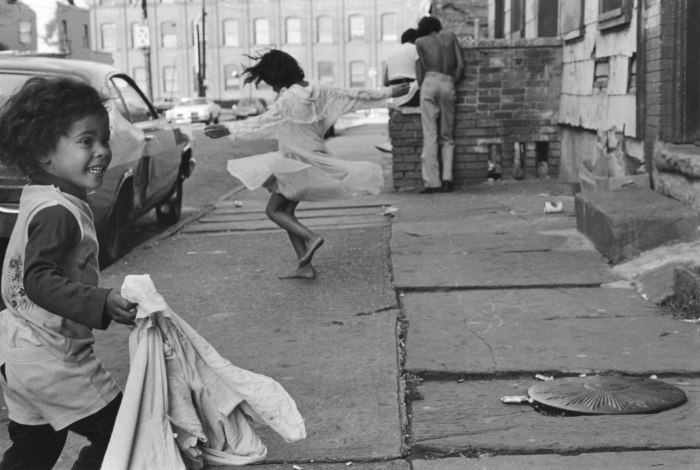
I CAN BE THE BEAUTIFUL BLACK MAN because I am the beautiful black man, and you, girl, child nightlove, you are beautiful too. We are something, the two of us the people love us for being though they may call us out our name, they love our strength in the midst of, quiet, at the peak of, violence, for the sake of, at the lust of pure life, WE WORSHIP THE SUN,
We are strange in a way because we know who we are. Black beings passing through a tortured passage of flesh.
These lines are from Black Art, published in 1966.
Come, Freedom Train, to Newark and we shall be Impressed by you and seeking to impress, For in our city, aged three hundred ten, There runs the thread of all our nation’s past; Not only do we view the past with pride In heroes, workers, folk of every hue; We look our present squarely in the eye And seeing flaws which mar the life we seek, We purpose to remove from in our midst The blight of hate, the scourge of poverty, The evils of injustice, ignorance, The miseries of disease and pestilence. We would install in Newark and all around The lights of hope and love and brotherhood, The ways of peace and work and joint concern— For then, indeed, the Revolution lives, And Life and Liberty will be our own, And Happiness find us in close pursuit. Let’s make the ideals real—come, Freedom Train!
The American Freedom Train, part of the U.S. Bicentennial festivities, rolled into Newark on August 21, 1976. Alma Flagg’s invocation was included in a volume of conference papers entitled Newark 1967-1977, edited by Stanley Winters.
Tell me not in mournful numbers Trusts are but an empty dream, And the merger dead that slumbers And things are not what they seem. Trusts are real, trusts are earnest, Wealth unbounded is their goal, Dust thou art, to dust returnest Was not spoken of King Coal.
Princeton-educated Benedict Lincoln Prieth, with his brother Edwin, operated the German-language New Jersey freie Zeitung founded in 1858 by their father Benedict Prieth. In 1917 the Prieth brothers were arrested and charged for openly criticizing U.S. involvement in World War I. While under indictment the younger Benedict ran for city commissioner, with significant support from Newark’s German-American community. The trial ended in a hung jury in 1918.
“Plutocrat’s Chant” appeared in the December 1902 issue of The Whim, a journal published in Newark by Prieth and Ernest Crosby.
Now every day in Newark Is a whooptedooden day. And every soul in Newark Seems to rather like that way, For it keeps the circulation Circulating, and the blood, Mixing with the clay of humans, Makes a living, lusty mud, Which is bound to be so fertile That for years and years to come The growth of coming Newark Puts all rivals on the bum, And the Newark of the future Is going to be so great That New Jersey of the future Will be changed to Newark State.
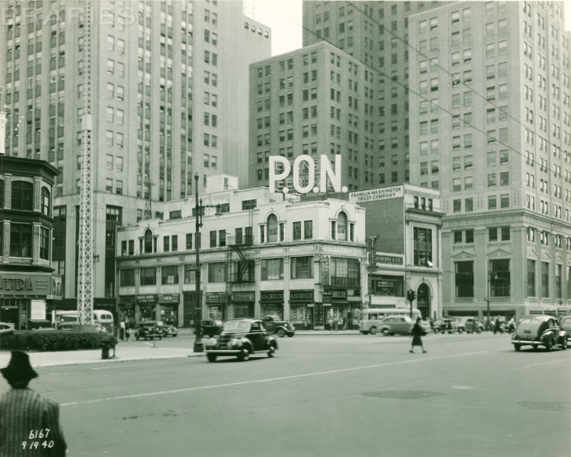
Newark’s Feigenspan brewery advertised on buildings and billboards across the state and the region, branding its wares “P. O. N.” for “Pride of Newark.” Giant illuminated letters shone from its buildings in the Ironbound even while the plant was shuttered during Prohibition, taken later as proof “that hope burned eternal in the brewer’s breast.” (New Jersey. A guide to its present and past)
Colonel Bill Lampton’s lines appeared in the June 1916 issue of The Newarker, and were reprinted the following year in The Newark Anniversary Poems.
Summer is dying—in the long wet grass The filmy cobwebs lay: Time is flying—for the cricket chirped At the close of the shortening day. Summer is dying—there’s an Autumn haze Beyond the sun’s bright sheen; The wind is sighing—‘tis the voice of Death That speaks through the waving green.
Shadows are lengthening across the sky, And trees have doffed their frocks of youthful green For robes of richer hue, while in between The clustered stars an opal moon gleams high Above the woods where sleeping violets lie Tucked in their leafy beds; the winds are keen With earthy smells, and everywhere are seen The last gifts of a summer soon to die.
Death! Yet how unlike other ends this one. With tenderness old summer decks each tree In brightest raiment, and with fragrant breath, Whispering softly that her life is done, She gently falls asleep: we hardly see That she has gone, so beautiful her death.
Manuscripts of verses by Emilie Fichter Cadmus and her daughter Mildred Cadmus Childs are preserved in the collections of the New Jersey Historical Society.
The sonnet by Newark Evening News editor George Bancroft Duren was included in his 1921 collection Written in Sand.
Come, citizens of Newark, proud, Of low or high degrees, Unite in story, song and ode, Float banners on the breeze, Awake the harp and raise the voice To laud our city’s praise, For Newark Day is here to stay Among our festal days.
Our fathers’ spirits shall behold Their work was not in vain; What sires once planned the sons have done Upon Passaic’s plain. By earnest toil, upon our soil, As passing years have flown, The walls of temple, mart and home Have risen stone on stone.
Europa sent her stalwart sons From English moor and town, From German vineyard, Flemish farm, Or Scottish heather brown, From Polish plain and Irish bog And sunny Roman land, To build anew their hearths and homes Along Passaic’s strand.
And these with those New England men Who first sought here a home, Have labored side by side in peace; For under heaven’s dome No dearer place for them, they felt, Could anywhere be found, And love of country, love of home, They learned in tilling ground.
Soon Industry and Thrift came here To crown our fathers’ toil; Their wants were few, but well supplied From Jersey’s fertile soil. Their gratitude to God they gave In formal psalm and prayer, Believing He alone could bless Their labor and their care.
What mean these massive walls of brick That look like castles old? No place of idol state are they, No keep for hoarding gold; But busy factories of trade, Where lathe and loom and wheel Are busy servants, helping man Promote the common weal.
What wonder if our fathers erred In many things they did? How could they know our present needs Which Time from them had hid? For them Passaic’s lordly flow Brought blessings from the hills, And on his heaving bosom came No stain from town or mills.
O citizens, awake and claim That river for your own, Its stream and banks a legacy Of fabled worth has grown. Your buildings for the public use, And every park and square, These are the jewels you must prize And make your daily care.
Then, long live Newark, proud and great, The home of industry, Create new beauties for her own In stone and spreading tree. Let all her people join the song In one triumphant strain, And praise the town with heart and voice In loving, glad acclaim.
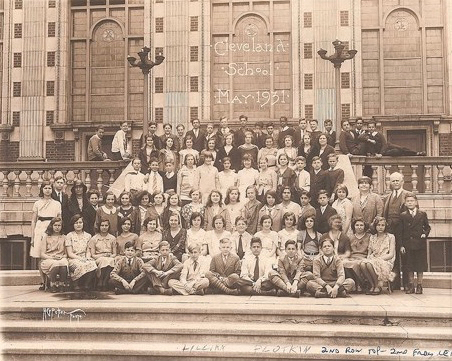
In 1910 the Board of Education proclaimed the first “Newark Day” and in 1911, with money contributed by Newark pupils, the Schoolmen’s Club began to place a series of bronze tablets honoring figures and features of the city’s distant or recent past. Plaques were dedicated on Newark Day, the first Monday of November, over the course of the next eighteen years.
Martin L. Cox, principal of Thirteenth Avenue School, composed these verses for his students’ Newark Day observance in 1916, the city’s two hundred fiftieth anniversary year. The Newark Star printed the poem on October 26, “so as to bring it before the other school children of Newark, in order to instill civic pride in their hearts.”


 newarkpoems