celebration ode

by Lyman Whitney Allen

Image: Arshile Gorky via artblog
Image: Arshile Gorky via Artblog

                        I

Great City of our love and pride,
Whose centuried fame is nation-wide,
        And wider than the alien seas,
To her we cry “All hail!” and bring
Devotion’s gifts the while we swing
        Censers of burning loyalties.

She answers in the regnant mood
Of Love’s triumphant motherhood,
        As round her surge the chants and cheers
Of joyous hosts that celebrate
Her times of eld, her new estate,
        Her quarter of a thousand years.

                        II

The sun in heaven did shine
        And all the earth sang “glory.”
’Twas Beauty’s immemorial sign,
        And Nature’s annual story.
The woodland birds were all awing;
        The hills and vales were rich with bloom;
’Twas Mayday, heyday of the Spring,
        And Life’s fresh gladness and perfume.

The fairest flower that decks the earth,
        In any clime or season,
Is that of a great ideal whose worth
        Time proves at the hest of Reason.
’Twas such they brought, in those days of yore,
And planted deep on our Jersey shore,—
A strange new flower whose growth became
Love’s healing for the civic frame.

It spread and every dawn was brighter
        And every creature obeyed its thrall;
We count the others lesser, slighter—
        The Rose of Freedom is worth them all.
The bluebirds know it,
The grasses show it,
        The south winds waft it through mart and street;
All else may perish,
’Tis ours to cherish
        This Jersey blossom from Robert Treat.

                        III

Hail Robert Treat the Puritan,
And the brave thirty of his clan!
        And that far fair Elizabeth,
Whose feet were first to tread our soil,
        A Puritan maid, whose betrothal breath,
        Fragrant with legendary grace that knows not death,
Works witchery naught may e’er despoil!

Superior souls were they,
        Who, in yon earlier time
Of Oraton’s rude Indian sway,
        Began this commonwealth sublime.
They laid foundations deep and strong.
The while they built they sang that battle song
The Ironsides chanted at Naseby and Marston Moor,
And all the hosts of freedom shout it forevermore.

The eyes of later sons behold
Their father’s faith and dreams of old,
Their Puritanism clear and brave,
Love’s sterner instrument to save,
Truth’s temple built with frame august,
To keep our great committals from the dust.

                        IV

List to the stir of the minute men!
        Hark to the roll of drums
                And the tramping of arméd feet!
        Lo, the great commander comes—
                Washington, leading a great retreat!
Welcome them patriots, now as then!

What soul was his to perceive the stair
From sky down sheer to the Delaware,
And trailing pageantry of light!
What seer of the nearing Christmas night
To hear God’s bells through the wintry gloom
Toll out the foeman’s doom!

O seven-year fury of war,
        For sake of a golden dream!
No whit of Old Glory, or Stripe or Star,
Shall ever bear stain or mar,
        While men remember redemption’s stream,
And cherish the all-consuming blaze
        Of Freedom’s holy battle ire—
Those Revolutionary days
        When Jersey’s blood was fire.

                        V

O Peace, thou gentle one!
No sound of belching gun
Displays thy heavenly part;
For Beauty’s architect thou art.
Thou buildest domes of grace
        That catch and echo back
                The spirit’s joyous singing.
Thy high and sacred place
        Is where no tempest’s wrack
                Its bolts of hate are flinging.

The elements of air and earth!
        What willing slaves they fast became
To those new masters! Solid worth
        Rose from the dust to shining frame.
Th’ expulsive smithy fire,
The mill-wheel’s creaking sounds,
Stage-coach, the “Old First” spire,
        “The Hunters and the Hounds,”
The workshop, mart and school,
        And “Cockloft Hall,”
And Combs and Boyden snapping custom’s rule
        Across the knees of genius!—History’s thrall
Enwraps and brings the glow of worthy pride
To us to whom our fathers’ gifts were undenied.

                        VI

War clouds were wildly gathering.
        One rode through the City’s streets,
                Under Fate’s horoscopes.
                        Men bowed in awe as he passed—
                Lincoln, the hope of a Nation’s hopes,
                        Riding to meet the approaching blast.
O Newark, what memories spring
        Out of thy deep heart-beats!

The black storm rolled, surcharged with thunder,
While levin of hate tore the sky asunder;
The earth yawned wide and incarnadine;
Deep hells flared forth where heavens had been;
And Jersey’s soul was a sacred cup
        Filled unto the brim with patriot blood,
And offered, thank God, sublimely up
        For Freedom and Country. And thus she stood,
And thus men marched, her heroes marched—
The ebon sky with light unarched—
And thus the regiments marched, and marched away,
The regiments marched day after day,
While tears were hot upon ashen faces,
And anguish was mistress of love’s embraces.
O God! but it was terrible, terrible,—
’Twas part of a Nation’s taste of hell,
To be inspirer to oppresséd nations,
Emancipator of future generations.
O City of heroes! Thou didst thy duty well.

Beautiful days since then have been—
        Days of our golden heritage.
        Right is the warrior’s master wage;
Peace is the garden that freemen win.

                        VII

What is this with its mighty thunderings
        Shaking a city’s fundaments?
This is the voice composite of toil that springs
        Out of ten thousand fiery vents.
This is the roar of a city’s industrial life.
        Throb of her engines, whirr of her wheels,
Furnace and dynamo, traffic and artistry rife,
        Strenuous giant that rages and reels
Backward and forward with passion cyclonic strained,
        Lifting gigantic arms and hands
Glutted with products, by sweat and by sinew gained,
        Offered to native and alien lands.

Wise men who follow Love’s starry frame,
        Here in this modern age,
                See where it hovers now
Sheer over smokestack and belching of flame.
        Greet Right’s increasing wage,
                Unto his triumphs bow.

                        VIII

Queen City of Industry!
        And whence doth wisdom come?
                Never a mortal son,
                Only the Thronéd One
Is great enough for thee
        And all thy radiant future’s sum.
Thy sires immortal on heights above
        Chant Vision’s increasing strain,—
’Tis God alone has the right to reign,
Since He is the Lord of Love.

The discords of drudgery turn to the melodious measures
        That fill the machinery of toil;
Faith’s song of emancipation, time’s chiefest of treasures,
        Ascends out of life’s turmoil.
The heart of the quickening world rejoices;
        Democracy’s prophets command, “Make way!”
While Wealth and Labor, with federate voices,
        Proclaim the Earth’s New Day,
And all the hosts of service spring
        Up the steep slopes of righteousness,
        To answer Justice with loud “Yes,”
To answer Love as ’twere their King.

                        IX

Out of the marshes she proudly rises,
        Greeting her Golden Age;
Civic symbol of Art’s emprises,
        Liberty’s heritage,
Triumph of Industry, Glory of Miracle,
Facing the Future’s alluring spell.

Set all the whistles blowing!
        Set all the flags a-flying!
                Cheer her predestined majesty!
                        Chant her apocalypse!
Up to her feet the sea is flowing;
        Thousands of eager ships are lying
                Waiting her on the invaded sea.
                        Hers are the sea and the ships.
Blow, whistles blow! Wave flags unfurled!
Newark belongs to the world.

Lyman Whitney Allen was poet laureate of Newark’s 250th anniversary festivities.

The Ode was a commissioned work, delivered at the opening exercises on May 1, 1916, in the new Proctor’s Palace at 116 Market Street. Inside the cavernous theater “every seat from pit to gallery was occupied,” exulted the celebration’s official journal The Newarker, “and the boxes shone resplendent with the wealth and fashion of the State and city.”

robert treat

by Allen F. Brewer

Image: Library of Congress

They’ve Robert Treat dramatics
        And a Robert Treat cigar,
Our beer—the pride ‘o Newark’s sons
        Is “Treated” near and far;
They tack his name to fads and frills,
        To hats and brands of shoes,
And Robert Treat’s the slogan
        On some groceries we use.
We’ve got a Robert Treat hotel,
        Our pride today, you bet,
His name’s upon a Newark school
        And soon a cigarette.
And e’en the highest hope of every
        Newarker we meet,
Is to name his “nineteen sixteen boy”
        A Junior Robert Treat.
Thus, should the shade of dear old Bob
        Appear to us today,
What shock must greet his eyes to see
        His name in such display.
The Hallelujah Chorus
        May not chant his name aloud,
But still we’ll bet Bob Treat is famed
        Up where the angels crowd.

According to art historian Ezra Shales, products emblazoned one hundred years ago with the figure of founder Robert Treat and other symbols of Newark’s Puritan past included “cuff links, lapel buttons, brooches, flag buttons, tie clasps, ash trays, silver loving cups, napkin rings, paper weights, jewel cases, match boxes, baby’s mugs, leather coin purses, cigarette holders, book covers and watch charms.”

Allen F. Brewer’s jesting homage to all things “Treat” ran in the September/October 1916 edition of The Newarker.

the first city planning

by Leonard Harmon Robbins

Image: S. H. Congar, in Jonathan F. Stearns, First Church in Newark (1851)

Jasper Crane,
With rod and chain,
Plotted down
Newark Town.
Gray with age,
Grave and sage,
The plan he laid
When the town was made.

Pierson, pastor
And Treat, the master,
Lent him aid
When the lines were laid;
Wisest three
In the colony,
And Crane was quick
At arithmetic.

“Build,” quoth he,
“Fair to see;
Serve them well
Who here shall dwell.”
The years increase
To centuries—
His work was good
And his work has stood.

Broad Street wide,
The city’s pride,
Throve and grew
On the lines he drew;
And the Training Place,
Our breathing space
In the city’s heart,
He set apart.

To him we owe
The pretty show
Of living green,
The spot serene
Now Washington Square.
The townsfolk there
Drove cart and shay
On Market Day.

The Corners Four
His imprint bore—
A wildwood then,
Untrod by men.
He could not see
That the cross would be
The busiest way
In the land one day.

The East Back Street
And the West Back Street,
Though each may claim
A prettier name,
Follow the lines
Of his designs;
Still run by the chain
Of Jasper Crane.

Thousands go
To and fro
In the lanes he broke
For the Founder folk.
The town’s still new;
There is work for you,
There are paths to lay
As in his day.

Jasper Crane is credited with laying out the original commons and streets of New Haven.  He left Connecticut in 1666 for Newark, of which he and Captain Robert Treat became the first magistrates. Evidence is scarce that Crane in fact delineated Broad Street, the Training Place (now called Military Park), the present Mulberry and Washington Streets or other components of Newark’s earliest town plan.

Leonard Harmon Robbins wrote for the Newark Evening News, producing light verse which he later published as Jersey Jingles (1907). “The First City Planning” appeared in the News of May 6, 1916.

the founders

by David Maclure

Reinventing Newark p87
Image: H. M. Pettit, proposed Prudential Insurance Co. Headquarters in Reinventing Newark

Here where a giant city’s pulses throb,
Where falls the tread of ever-hurrying feet
Thronging the broad Rialto of to-day,
Here where triumphant industry and thrift
Have reared their monumental towers on high
And where upon a thousand tides are launched
The argosies of genius, labor, skill,—
Here, bid the Past arise from mists of time,
Here, sweep away the pageant of To-day;
The throngs of hurrying men, the city’s life,
The garnered fruits of husbandry and wealth,
Yea, sweep away the progress and the pride
And all the triumphs of man’s toil and sweat
That centuried time has builded in our midst,
And in the charm of virgin innocence
Behold the commonwealth where now we stand
Bride of the solitude and wilderness.

O fair young bride, how simply art thou busked
Here in thy dwelling by the blue Passaic!
Green meadows eastward to the river’s verge
And westward, upland slopes and forest glades
To mountain solitudes, the scattered homes
Of men, the vagrant lanes that stole away
And fled into the wilderness beyond,
The village church; a fortress and a shrine,
The burial ground, the common and the school,
The planted fields, the low of grazing herds,
The shining river winding to the bay
The green and level meadows washed with brine,
And far away the wandering Hackensack,
A glint of glittering silver in the sun.

And they who made a habitation here,
Who dared the rigors of a wilderness
And met the red man in his native wilds,
Who hewed the forest, planted fertile fields
And built the sacred altar fires of home,
Shall these, the builders of a common-wealth,
The founders of a city, know no fame,
Nor claim the tribute of posterity?
Brave band of sturdy men, heroic souls!
Not heraldry but virtue made thee great,
Plodding the path of humble duty, still
Ye wrought, and builded greater than ye knew,
Yea, on foundations of integrity
Ye laid the civic glory of to-day.

And what a dower of valor, virtue, faith
Is ours. A heritage to guard and keep,
Yea, ours to build upon the prestiged past
Far loftier temples than our fathers dreamed,
’Tis ours to build a city of the soul,
And rising from life’s sordid things to know
That men of virtuous lives and noble aims
Alone can build the perfect common-wealth,
For though our trade, our skill, our wealth increase,
We still may be a shame–for doubt not this:
A city’s glory is her citizens.
Remembering this, great may our city grow,
Each man a partner in prosperity,
Each man a brother to his fellow-man,
Sharing the gains of labor and of skill,
Rich in the spirit’s fruits beyond all else,
Proud of his fellow-man, proud of himself,
Proud of his home, the city beautiful.

David Maclure was the principal of Chestnut Street Primary School between 1890 and 1913. He wrote historical fiction as well as verse.

The 45-story office tower and pedestrian subway shown in the above drawing were proposed in 1916 for the intersection of Broad and Market Streets. They were never built.

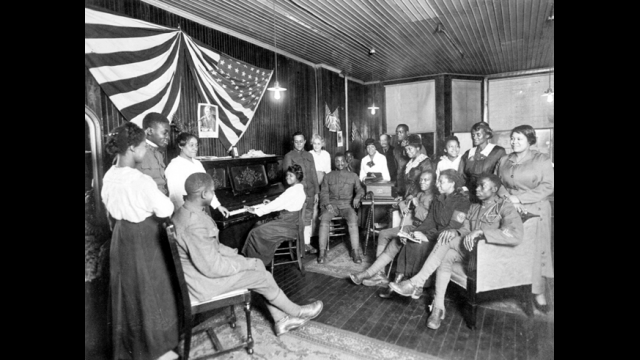
oh mudder mine

by Amorel E. O’Kelly Cooke

Oh Mudder mine, Oh Mudder mine
        The night has come, de bright stars shine
I caught just now of heaven a view
        While I stood waiting here for you.

Oh Mudder mine, Oh Mudder mine
        Some how de sun don’t brightly shine
If in de day de birds sing clear
        De sound don’t reach my lonely ear.

De day you kissed me at de door
        I never dreamed we’d meet no more
I wore my khaki suit away
        You said “my boy des allus pray;

You pray for me, and I for you
        And God will bring you safely through
And if we meet no more I’ll wait
        For you at Heaven’s golden gate.”

Oh Mudder mine, Oh Mudder mine;
        Right in de foremost fighting line
I battled night, I battled day
        I never once forgot to pray:—

And when de said de fight was through
        I hastened Mudder home to you
I did not care for “CROIX DE GUERRE”
        I only longed your voice to hear.

I wanted you to hold me close,
        Oh Mudder you who loved me most
I did not care for any praise
        I wanted just to see your face.

But when I reached my home to-day
        De told me you had gone away
Where Heavens stars forever shine—
        Oh Mudder mine, Oh Mudder mine.

Image: The National Archives via Baylor University

Amorel E. Cooke served as president of the Colored Women’s Volunteer Service League, which organized a canteen and rest house in Newark for black servicemen during World War I.

For the fifty-year jubilee of Bethany Baptist Church, Cooke produced an invaluable record of its congregation in Faded foliage and fragrant flowers from the heart of Bethany (1922). The book included a number of her poems, this one among them.

the builders

by Berton Braley

Alland (1)
Image: Alexander Alland via Newark Public Library

Never a jungle is penetrated,
        Never an unknown sea is dared,
Never adventure is consummated,
        Never a faint new trail is fared,
But that some dreamer has had the vision
        Which leads men on to the ends of earth,
That laughs at doubting, and scorns derision,
        And falters not at the cynic’s mirth.

So the dreamer dreams, but there follows after
        The mighty epic of steel and stone,
When caison, scaffold and well and rafter
        Have made a fact where the dream was shown;
And so with furnace and lathe and hammer,
        With blast that rumbles and shaft that gleams,
Her factories crowned with a grimy glamour,
        Newark buildeth the dreamers’ dreams.

Where the torrent leaps with a roar of thunder,
        Where the bridge is built or the dam is laid,
Where the wet walled tunnel burrows under
        Mountain, river and palisade,
There is Newark’s magic of nail or girder,
        Of spikes and castings and posts and beams,
The need and wants of the world have spurred her,
        Newark—city that builds our dreams.

She has fashioned tools for the world’s rough duty,
        For the men who dig and the men that hew,
She has fashioned jewels for wealth and beauty,
        She has shod the prince and the pauper, too;
So the dreamer dreams, he’s the wonder waker,
        With soul that hungers and brain that teems,
But back of him toils the magic-maker,
        Newark—city that builds his dreams.

A prolific versifier and lyricist, Berton Braley won a $50 prize for this submission to Newark’s 250th anniversary poetry contest in 1916.

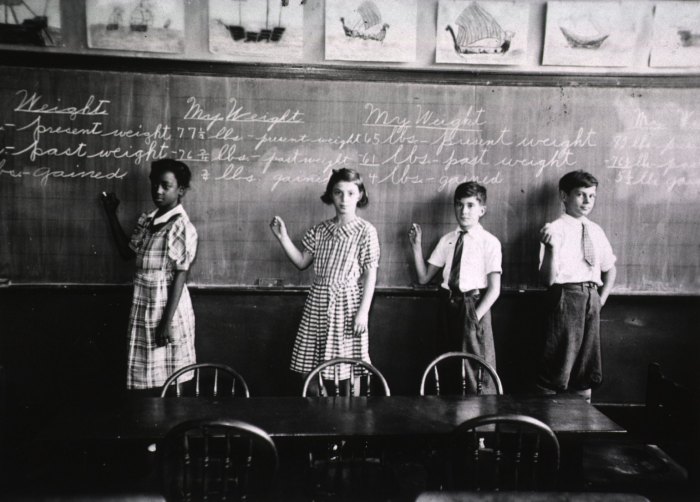
a salary sonnet for teachers

by William Lewin

Image: National Library of Medicine

My purse is thin tonight, and O the rain
        Weeps down in torrents, and the east wind sighs,
        Bidding the naughty world to lachrymize
For all the teacher’s horrid, unpaid pain,
His check book’s anguish, and the dolorous train
        Of mental sufferings that agonize
        The devotee of youth before whose eyes
Rises the Vision of the Raise in vain!

Pour then, ye torrents, and ye winds complain!
Fair weather would be bittersweet to me
        And all the loveliness of sunny skies
A heartache. O let sun and stars disdain
        To look on men till taxing gods devise
A cure for all the teacher’s misery!

An English teacher at Central High School when this poem—pseudonymously signed “A mere pedagogue”—appeared in the Newark Evening News of February 22, 1919, William Lewin later served as president of the Schoolmen’s Club, which raised funds to place historic markers around the city. He authored pamphlets on historic subjects, and promoted the educational value of motion pictures both in Newark and nationally.

a city on a hill

by Joseph Fulford Folsom

Newark! to-day begins thy lamp to shine
With power high to flash the distant peaks
With messages of hope.  Thy gladness speaks,
And lo! a nation’s soul is knit with thine:

A city on a hill thou art, a shrine
Of homing pilgrims, who afar the streaks
Of thy new dawn behold—a dawn that breaks
Prophetic of a day without decline:

Ah! may that gleam forever love reveal,
That in the common heart lives warm and pure,
And spends itself for all humanity;
And may the dawning of a nobler weal
Of spirit beauty, and of goodness, lure
Our souls to light and civic sanity.

A writer of historical pieces, a clergyman, and the recording secretary and librarian of the New Jersey Historical Society, Folsom published this sonnet in the March 1916 issue of The Newarker.

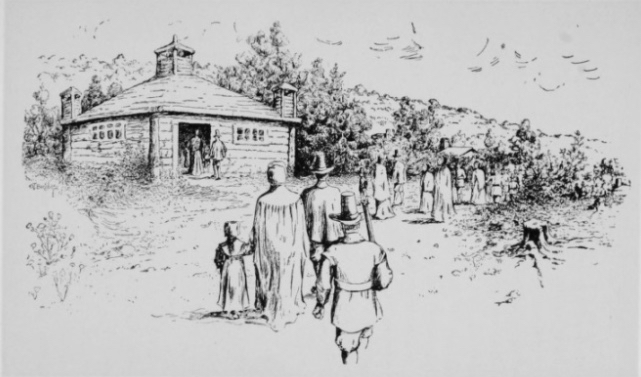
colonial newark

by Martin L. Cox

O ye, who love lore and tradition,
        The legends and tales of the ancients,
The records of danger and struggle,
        Of toil and of effort unceasing,
To you, will we bring the true story
        Of founding and building our city,
Great Newark, the Queen of Passaic.

Across the salt meadows of Jersey,
        Where wave the salt tresses of marsh grass
In billows like those of the ocean,
        Made bright by the flowers of the mallow,
Lay spread in the glorious sunset,
        The slopes of the mountains of Orange,
Like sentinels guarding the valley.

By wagons with cattle and household
        Came settlers from colonies eastward,
To build by the lordly Passaic,
        A town for defence and protection,
Where God might be worshipped with freedom,
        And industry bring to them comfort
And homes blessed with peace and security.

Together they dwelt in the village
        With farms so fertile about them
That comfort and plenty abounded,
        And colonists flocked o’er the Hudson
To share it with neighbors and kinsmen
        Until they had worn a wide highway
Connecting the town with the Hudson.

The church in the midst of the village
        Gave blessing and hope to the settlers
Whose toil-burdened lives took fresh courage,
        As pastor and people considered
The lives of the leaders of Israel,
        Who built up a nation of power
In Jordan’s unpromising valley.

With cherries and peaches and apples
        The orchards were laden in season.
And many a gathering of young folks
        Was needed to care for the harvest,
For maidens and youths all looked forward
        With eager and glad expectation
To curing and storing the apples.

When trees had been plucked of their fruitage,
        The apples were sorted and taken
To cellar for use of the household,
        Or sent to be made into cider.
In clean, sanded kitchens the young folks,
        With knives and with basins for paring,
Assembled with laughter and pleasure.

Great buckets of apples before them
        Soon fell bereft of their wrappers,
While matrons divided and cored them,
        Preparing the fruit for the curing.
Both busy and happy, their lives were,
        And pleasure with toil intermingled
Made labor delightful and easy.

The slopes of the mountains were covered
        With plumes of the maize in the summer,
The gift of the red—to the white-man,
        Which helped the first settlers to prosper.
With frost, it was ripe for the cutting
        And hum of the grind-stone and chatter
Of men filled the plains and the uplands.

From pastures in woodland and meadow
        Came oxen with wagons or sledges
To bear this rich treasure homeward.
        In crib or in stack it is garnered,
And people give thanks in the churches
        For safety and bountiful harvests,
That come from the good Lord, Jehovah.

In winter, the maid or her mother
        Keeps weaving the wool into homespun
Or flax into linen for clothing
        On looms in the kitchen or best-room,
While men dress raw skins for the leather
        That is needed for boots for the people
When snow covers village and valley.

So lived the first settlers of Newark
        Along the Passaic which carried
The floods of the mountains in springtime
        And boats of the settlers in summer.
Thus, lived they, in peace and contentment,
        In quiet enjoyment of freedom,
Of peace and of church and of friendship.

Image: Frank J. Urquhart, A short history of Newark

Martin Luther Cox was principal of Thirteenth Avenue Grammar School and presented this poem at the June 1910 commencement.

salute to a city tree

by Margaret Tsuda

Image: Akintola Hanif via HYCIDE

Your roots push and
hump under the cement
that men have
lain upon you as if
you were a
prisoner to be
denied
                even water.

The exhaust gas of
many motors has
stripped and blackened
a half of your branches.

The bright tender
green of your buds
and leaves
is grayed by the
unremitting
smokeshade of
the city.

But passersby
can see that
you believe
“I am that which lives.
I will grow.”

For this
we humbly
                salute you!

In an Arbor Day booklet prepared for Newark school students in 1916, Shade Tree Commission secretary Carl Bannwart wrote: “The more you come to know of trees, the more you’ll come to love them. And whatsoever you truly love, you take care of without urging.”

The Christian Science Monitor of November 14, 1970, published this poem by longtime resident Margaret Tsuda. It appeared in her collection Cry love aloud in 1972.